So Rans has recently announced some improvements to their S-7LS Courier, and even more recently announced that their S-6 and S-19 is going to be discontinued in the Ready to Fly category.
I can't blame them, and I think it'll do well for the industry. Here's why: too much competition.
Piper could make an affordable airplane in the 1940s because they built thousands of them. At one point, one J-3 was rolling off the assembly line every 20 minutes. They build 19,073 of them. Nineteen *thousand* seventy three. The LSA manufacturer's have trouble selling a couple hundred, these folks sold almost twenty thousand.
But think about it, what competed with the J-3 at the time? The Aronca Champ/L-3, the various offerings from Taylorcraft, to a point some Luscombes, and that's about it. There weren't zillions of 60 year old aircraft, nor were there 19 other manufacturers building an airplane damn near identical to yours.
That's what's going on today. Gee, how do you decide which do buy? Rans S-6 Coyote, Kitfox, Eurofox, Just Aircraft Highlander, X-Air, Cheetah...All of these are Rotax 912 powered, tube-and-rag, side-by-side LSAs, most available with folding wings and with the capability to be easily converted from taildragger to trike and back again. The market didn't need the SLSA Coyote. It's a great aircraft, but the world just doesn't need teh SLSA version. I'm glad the kit is still produced.
Same with the S-19 Venterra. It blends right in with the Sting Sport, Sport Star, SportCruiser, Tecnam Sierra, and others like them (low wing, rotax powered, all metal (the sting is composite), side by side tricycle.) The S-19 didn't have much to set it apart. In fact, I would rather have another plane in that list than the Rans.
The S-7LS Courier though. Ooh buddy. I spent some time drooling over the SportCruiser/PiperSport, and I'm gonna drool here too.
The SportCruiser is the modern, sleek thing you see yourself looking sexy on a California cold winter ramp in your leather jacket and khakis, loading your leather flight bag in the back and taxiing out onto that long black asphalt runway. The Courier is more at home on a grass field in the late summer, with a pilot in shorts and sandals leaning on a faded "learn to fly here" sign. If the SportCruiser looks like the hot college daughter of a DA-20 and an XL-2, the Courier is her hot roommate, the daughter of a Cub and a Citabria.
The Courier is on a niche of it's own. It's not one of the Kitfox clones I listed above because it's seated in tandem rather than dual. It isn't a boldfaced ripoff of the Piper Cub like the products Cubcrafters and American Champion. It's more like a modern homage to the classics as a whole. There's some cub in there, there's some champ in there, and there's a few things that are all her own. You can own one for less than $100,000 too.
This is the kind of thing that needs to happen for Light Sport to survive. Duplicates need to go. Can you tell me why the market needs both the CTMC and the Tecnam Eaglet? Some manufacturer's need to stick to EAB kits. Vans has an interesting idea: They certified one SLSA, haven't sold it, and are selling RV-12 ELSA kits by the gross, while still selling their other experimental kits. Sonex is doing well without producing ready-made aircraft.
I think the industry could do very well if there were a lot of manufacturers of very quick build kits (think 50 hours or less, mostly assembly and rigging), and a few very good SLSAs. I think Rans is doing about what it should.
Wednesday, February 15, 2012

Monday, December 20, 2010
Updates and other news
Well, I finally did it. I took the checkride, passed, and I'm now a certified and working flight instructor. Yay for me!
Now that I have secured a source of income, I'm onto phase 17 of my Master Plan: Moving the crap out of my parent's house. I can't afford an apartment, plus there are undesirable side effects of apartment life: very close, irritating neighbors. I have become enamored with very tiny houses a la Jay Shafer's Tumbleweed houses, particularly his Fencl.
I can't just buy or build a Fencl as designed, though. North Carolina law doesn't provide for a house built on a utility trailer. Either it's titled as an RV, or it's subject to the building code. So, the options I have explored are as follows:
Building on pontoons: As far as I can tell, you can do just about any dang thing you want on a pontoon boat. I could even float it on a private pond without ever contacting the government once. Without an engine or related systems, it would essentially be the aquatic version of building on a trailer. The downside here is huge: I have absolutely no experience designing and building a boat, and I'm worried about how heavy/topheavy this thing is. I'm also concerned that the required pontoons would be more expensive than building on a trailer.
Building an RV: This is as close to the original plan as I can figure. Instead of using a utility trailer as a chassis, I'll use axle kits and so forth to create a custom chassis. This way I can build a homebuilt RV, with a recreational vehicle title and everything. Then it becomes about building it to DOT standards. My metalworking is questionable at best, but I imagine I could construct a roadworthy chassis to mount an axle kit or two on. I also have to build it light enough to be towed by my pickup truck, though probably only over short distances.
I'll keep a record of progress here.
Now that I have secured a source of income, I'm onto phase 17 of my Master Plan: Moving the crap out of my parent's house. I can't afford an apartment, plus there are undesirable side effects of apartment life: very close, irritating neighbors. I have become enamored with very tiny houses a la Jay Shafer's Tumbleweed houses, particularly his Fencl.
I can't just buy or build a Fencl as designed, though. North Carolina law doesn't provide for a house built on a utility trailer. Either it's titled as an RV, or it's subject to the building code. So, the options I have explored are as follows:
- Build the house to code on a foundation
- Build the house on pontoons and call it a houseboat
- Construct an RV from scratch with the houses floor plan
Building on pontoons: As far as I can tell, you can do just about any dang thing you want on a pontoon boat. I could even float it on a private pond without ever contacting the government once. Without an engine or related systems, it would essentially be the aquatic version of building on a trailer. The downside here is huge: I have absolutely no experience designing and building a boat, and I'm worried about how heavy/topheavy this thing is. I'm also concerned that the required pontoons would be more expensive than building on a trailer.
Building an RV: This is as close to the original plan as I can figure. Instead of using a utility trailer as a chassis, I'll use axle kits and so forth to create a custom chassis. This way I can build a homebuilt RV, with a recreational vehicle title and everything. Then it becomes about building it to DOT standards. My metalworking is questionable at best, but I imagine I could construct a roadworthy chassis to mount an axle kit or two on. I also have to build it light enough to be towed by my pickup truck, though probably only over short distances.
I'll keep a record of progress here.
Saturday, May 22, 2010
In unrelated news...
I'm beginning to hate the phrase "Exhibits knowledge of the elements related to..." It's a grammatical nightmare that can be replaced by the word "understands." It's the FAA doing what a government does best: complicating things. To the government, a spade is not a spade, it is a user-enabled terrain altering earth leveraging device. Either way, I call it a shovel.
I'm going to label the junk drawer in my kitchen "Various random and sundry articles of assorted miscellaneous paraphernalia" just to see if anyone notices. I'll probably get taxed, somehow.
I'm going to label the junk drawer in my kitchen "Various random and sundry articles of assorted miscellaneous paraphernalia" just to see if anyone notices. I'll probably get taxed, somehow.
Flying with Angels
The Blue Angels are performing in Cherry Point this week. Their work simply amazes me; I would give my eyeteeth to have that level of control and precision. Anyone who has ever tried doing a "simple" steep turn in an airplane can appreciate the sheer amount of work and discipline and practice that goes into a Blue Angels performance.
I want that skill.
I want that skill.
Monday, April 19, 2010
Value in Aviation
Today I'd like to rant about what a ripoff most things in flying are.
I recently purchased some training material from King Schools, their Sport Pilot Instructor Checkride Course. $119 plus shipping and handling. I had it shipped by the cheapest method, $11 or so by UPS ground. That's a deal if you think about what it costs to move a pack of CDs across the country, it came from California.
I wait a week for my course to arrive. A box from King Schools was on my porch. I opened it up, and inside was the Sport Pilot Checkride Course, along with the packing slip, a commercial for Avemco insurance, two (count 'em, two) King Schools catalogs, some krinkled paper, and a pad of useless navlogs (Free! With your purchase of $49 or more!) that don't have proper space to perform wind correction calculations. A blank pad of paper would be more valuable to me.
Anyway, you may note that I got the wrong checkride course. And I'll give credit when it's due, I can see how the mistake happened. The course consists of a clear plastic bag, similar in construction to a potato chip bag, except made of celophane rather than mylar. Inside of this is one of those CD keep cases that resembles a DVD keep case except it's about an inch thick, and a copy of the PTS. The neat thing is that this print copy of the PTS deletes the Weight Shift Control and Gyroplane pilot and flight instructor portions, including just the airplane pilot and CFI sections. Sweet!
The keep cases are almost identical in appearance, the only difference being that one says "Sport Pilot" in the green circle on the front, the other says "Sport Pilot Instructor/FOI" on the front. Both cost the same, hell, I could have mixed them up. But I still had to call the company.
It rang three times and a gentleman picked up the phone. "Thank you for calling King Schools, this is Name, how may I help you?" I had to restrain myself from saying "Wow, a real person!" I told my story about getting the wrong thing, and he fast fed-exed me the correct thing. That was on Friday, it got here Monday.
Inside this keep case (I didn't open the incorrect package) are 6 CD-ROMs, which contain a simple bit of software that acts as a media player, playing several youtube quality videos, 2 or 3 of which appear on each disc. The videos show John King acting as a CFI-SP applicant, and he hired a f'real DPE (who just so happened to be wearing a NAFI shirt, I think because he's a higher-up in the organization) to act as the examiner. They did a what I think was a complete checkride, demonstrating the skills required of an applicant, and how to pass the checkride. Notably absent--although it's mentioned on the case--is any oral quizzing about the PTS, it's just a bunch of "how would you teach___?" Unless I somehow missed it.
***
Here's the problem I have. I bought a similar product last year from ASA, one that is equivilant to the course I was sent by mistake. It's a single DVD that covers the sport pilot checkride, by a man named Paul Hamilton, CFI/DPE. It plays in a normal DVD player, and shows Paul giving checkrides to various students, demonstrating what the checkride will be like. It came with a book, a rather comprehensive study guide that includes the checkrides for Airplane, Weight-Shift and Powered Parachute, plus Flight Instructor. DVD and book: $59.95 plus shipping and handling. It also got here correct and on time.
You wanna know the real ball biter? The King Schools set (twice the price of the ASA set) has a license agreement that basically boils down to "One set per person. Don't show it to your friends. Don't let your friends hear the audio. Don't pass Go. Don't collect $200." It has an "enrollment password" system which is basically a software activation code. The code that came with my set was--as if by magic--already taken. I had to call the company again by phone to even use the product I bought. Now I see why there were no used sets for sale on the internet.
Also, without breaking their license agreement and facing a lawsuit, I can't use this product as a teaching aid. When I pass the checkride, I might as well melt the discs. Paul Hamilton's disc says "No Unauthorized Use" at the beginning. I can use it as a teaching aid, as long as I don't start selling copies.
So, what I got was something that is twice as expensive as it could be, in a form factor that's worse than it could be, that's 4.7x10^27 times less useful in the future than it could be. I will be contacting both authors and making that point.
Do I regret buying the King Schools course? No, it's a helpful training aid which I have learned from and become a better educator and aviator. I regret paying 120 bucks for it though. I only bought it because it's the only one like it on the market that I found. I'm pretty sure I've made my last purchase from King Schools. It's like a $65,000 Honda Civic. It's good, it'll get the job done, but it costs way more than it should. Oh, and they send you the one you didn't order, you wait a weekend not driving the car you were sent by mistake, and when your car finally gets to your house, you have to call the company and ask why your key doesn't start the car.
Likewise, the PiperSport: Base model, $120,000; LT, $130,000. The difference in equipment? a $2,000 EMS, some of the cost of which is mitigated by the fact that it replaces several instruments you don't have to install. likewise, there's the LTD for $140,000, the difference between it and the LT is two $750 servos, wiring thereof, and two panel-mounted control blocks together costing $1,100. $1,850 worth of equipment can be yours for another ten grand.
Blogging about mildly irritating events is a nice, healthy way of dealing with life's little frustrations. It's better than a private journal because it's allegedly public; at least 2 perfect strangers have found it so far.
Monday, February 8, 2010
To make it perfect
So I've flown the PiperSport/SportCruiser, and I can suggest a few ways to make it perfect.
1. Uninstall and throw the Dynon instrumentation.
2. Uninstall and throw the electric trim system.
3. Lower the glareshield to be absolutely no higher than the cowling.
4. Cut the canopy slightly larger. hmm, what words should I describe this with...Okay, there's to much can't see-through, and not enough see-through. It's hard to see over the nose, and it's hard to see ahead and beneath the wings. If you're going to ignore any one of these, make it this one.
5. Rig the flight controls a little heavier. I don't mean that it has to feel like an airbus, but shorten the levers slightly so it takes more control movement and pressure to maneuver the aircraft.
If these things happen, then I've found my airplane.
Monday, February 1, 2010
Parentage
Apparently my previous post was noticed by whomever operates Piper's facebook and twitter. My line about the PiperSport resembling the lovechild of a Liberty and a Diamond particularly.
I haven't flown a DA-20 yet, but I have had the opportunity to fly a Liberty. I first learned of Liberty from a little ad in AOPA's Flight Training magazine. I liked the clean, simple panel featuring regular round dials (I like traditional instruments, to the point of boycotting Garmin) and it's claim of being a cheap, affordable trainer.
One day I was at the airport and there was one sitting outside the flying club next door. A salesman was trying to sell them on the plane to replace their aging fleet of C-152's. I love looking airplanes over and determining what systems they have on board and critiquing their instrument panels. I struck up a conversation with the salesman and he offered to take me up. I don't pass up those opportunities if I can help it.
First thing you notice about the plane is it's pudgy appearance. For it's length and wingspan, it just looks plump. An unusual feature for a low-wing airplane is that it's boarded from the front of the wings rather than the back. One reaches up, opens the DeLorean door, steps on one of those little footsteps, steps up on the leading edge of the wing, sits on the wing/doorsill, and slides into the chair. A clever way to keep students and passengers from stepping on the daggum flaps a la every other low-winged airplane ever.
Then the problems begin to stack up. First of all the trim is all electric. My experience flying this airplane is why I'm leery of electric trim. I found it difficult to find "just right" with this airplane because the trim only moved at one speed. With manual trim you can make precise inputs.
Now, there's trim where all you've got is the electric buttons and motor, and then there's the regular, manual trim that can also be electrically controlled like you find on newer Cessnas. I like the latter because you could trim the airplane in the event of an electrical failure.
The flaps of the Liberty are also controlled by the same style rocker switch (wouldn't suprise me if both switches were the same part number). The flaps are infinitely adjustable throught their range. Back in my days of flying Cessnas I would have seen this as a negative feature, but given the pre-selectable flaps of the Allegro (-2, 15 and 48 degrees deflection) I like the idea of being able to put the flaps wherever I please.
Then there's the brakes. Castering nosewheel, differential finger brakes. Next to the throttle are two small levers set like the throttles of a twin. They are spring-loaded forward; to apply the brakes, you pull the levers aft. Pulling aft on the left one applies the left brake etc. These are the only way of braking and steering the airplane on the ground. The rudder pedals control only the rudder and are useless at taxiing speeds. In fact, at the beginning of the takeoff roll, it's impossible to hold the plane perfectly straight using only rudder, so until you build up airspeed and gain rudder authority, you might have to apply a tiny bit of right brake, or maybe line up aimed a little bit to the right of centerline.
Also, don't try any short field landings in the XL2. Those brakes are hard to pull and aren't very effective. In short, don't try to taxi the XL2 without a tube of Preparation H on board, cause it's a pain in the ass. I seem to recall the Liberty Rep saying that differential toe brakes were a cost option, but IMHO they should be standard for a castering nosewheel plane.
The control stick was a pain too. It didn't get in the way as bad as the brakes or trim, but you'll find that the sticks (one for each seat) are actually one stick, kinda like the old Skyboy except much larger. There's just one set of linkage amidships under the floor, and the stick is a giant U to give both pilots an end to hold. This makes the stick feel odd, because applying left aileron (from the pilot's seat, it'll be backwards from the right) feels like it goes down toward your thigh, but right aileron feels like the stick is going up toward your shoulder.
Liberty really loses points from me by marketing their plane as "FADEC Equipped." It isn't. They claim FADEC because the engine is equipped with Electronic Fuel Injection. The throttle is still controlled directly by the lever in the cockpit via push/pull cables, ignition is still performed by a pair of magnetos, and the propeller is fixed pitch. But, where many airplanes are still carbureted and require manual mixture control (or are equipped with mechanical fuel injection and require manual mixture control), the Liberty is equipped with EFI which automatically adjusts the mixture.
Now sure, the pilot can't control the mixture, so he has no authority over the mixture, (thus the EFI computers have full authority) it is digital and electronic (the E in FADEC stands for Electronic, not Engine), and it does control the engine, but FADEC implies that all powerplant related things are controlled by two or more identical and redundant computers in a coordinated manner, so that the ignition timing, fuel injection timing and duration, throttle position, turbo waste gate and propeller pitch all work together, rather than as separate systems.
THERE IS NOTHING WRONG WITH EFI! But Liberty didn't call a spade a spade. They called a spade a soildynamic personal earth moving device.
Last, the plane's handling was either docile or boring, depending on which hat I'm wearing while describing it. If I'm wearing the instructor hat, it's docile, very easy to control and ideal for a new student to learn how to climb, descend and turn. As an experienced pilot who's ready for some aerobatics training, it's boring. Great for primary training, but if I won one in a sweepstakes or something I would get weary of it quickly. "It's a nice day, I might go to the airport...or I would, except I've got that dreadful Liberty."
I just reminded myself of some of the folks who post on the PiperSport's Facebook fanpage. "Neat little plane, but can it hover in midair or land on a rooftop?" Don't buy an airplane if you need a helicopter. And don't buy a Liberty if you want a Pitts.
The demo model the Liberty rep had was sparsely furnished. The area behind the seats had no carpet, the fiberglass was naked and unfinished. I was told it was missing quite a few cost options which would make living with the bird more bearable.
The DA-20 Eclipse, from what I've read, seems to have it's act more together. The DA-20 is Utility category spin-certified, and has better thought out features. Trim and most secondary controls are manual, flaps are pre-selectable electric, and it comes with toe brakes. On the downside, there's a red-handled lever next to the throttle. But with a little hunting, you could find an older DA-20 Katana which was Rotax 912 powered.
And now onto a different topic: Why isn't there a utility LSA? Why can't you spin any of them? CFI-SP's can't take a sport pilot all the way to instructor without sending them to someone else because there isn't an LSA that can do spin training. I'm not rich enough to purchase a copy of the ASTM standards, so I can't get the answer from the jackasses mouth (I don't like ASTM because they're keeping aircraft certification standards a trade secret when it should be public information). Is it just prohibitively expensive to insure a spinnable S-LSA so they placard all of them against it?
And to one last topic before I bring this long post to a close. The PiperSport. If I may make a few humble suggestions to Piper Aircraft regarding their new acquisition. First, change the name to something less lazy, for the reasons mentioned in my last post. I also made fun of the Skycatcher by calling it the CessnaSport, which was that airplane's working title until they came up with Skycatcher. Please, just don't use the word Sport in the title, and no capital letters mid-word. Maybe call it the Skycoupe, a name Piper applied to a prototype in the 40's that was never produced. Piper Skycoupe a lot catchier than Piper PiperSport. Hell, I don't see what's wrong with Piper SportCruiser.
Once you've got that figured out, import it from the Czech Republic for awhile until you can tool up for American production and build those destined to fly over this continent on American soil. See, there are a lot of jobless people in America right now who don't like to buy products built by foreigners. Is it really more cost effective to build an airplane in another country 6 to 8 time zones away, box it up, and ship it across an ocean? If you built it here, you could wave an american flag over your entire product line and proclaim "The Piper Family, now built entirely in the USA."
Give us manual, or at least semi-electric trim. It's gotta be cheaper and lighter. ALWAYS offer a traditional panel, don't go to a 100% glass fleet. I would suggest doing that on all your trainer models, keep a traditional instrument panel as an option. Offer the parachute as an option and not as standard equipment. That thing costs like $10 grand and it weighs 30 pounds. Some of us would rather save the weight and carry superior training and skill in it's place. I bet you could sell a few more planes for $10,000 off. And maybe certify the ones carrying parachutes for intentional spins. An airplane that can be spun would be a nice addition to the Piper line (You've already got the only complex trainer, so if you had an airplane that could spin you could take a pilot from discovery flight to Instrument, Commercial, CFI, CFII, MEI all in Piper aircraft), and CFI-SP's could practice and become proficient in spin recoveries in the airplanes they teach in.
See, I took my spin training in a Cessna 150, an airplane I know I won't be training pilots in any time soon. It's spin characteristics are going to be different from that of whatever LSA I wind up with. And I can't practice the maneuver on my own, and examiners can't test instructors on spins. LSA's tend to be a bit twitchy about the yaw axis, so spins are easy to get into. I think instructors should be very sharp in spin recovery, not just "I've done them a few times as a prerequisite to taking the instructor checkride." Hell, I think pilots should all be trained in spin recovery.
I would just like to see an S-LSA without that placard on the panel. If Piper can do it, great.
Tuesday, January 26, 2010
The Piper Pipersport
The New Piper Aircraft Company (Are they still called that?) dropped a Top Gear style bombshell when they announced that they were going to market the CZAW SportCruiser under the Piper badge.
A few words about the SportCruiser as it was on 1/1/10:
The airplane was available as S-LSA or an E-LSA kit, and in either case the plane had a pretty awesome feature list. Like, this airplane can hold it's own against comparable certified airplanes.
Where to begin? Oh I know, to begin, it looks like this:
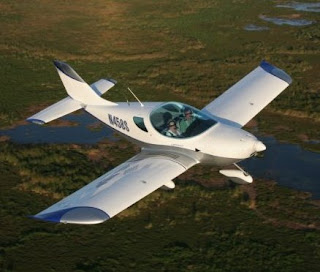 It's drop dead gorgeous. It looks like a Liberty XL2 and a Diamond DA-20 had a really hot daughter.
It's all aluminum construction, wings and fuselage. It hit the market in 2006, and I think it's age and construction come together to give it it's classic yet contemporary lines. It looks right at home standing on the ramp in between a Cessna 350 and a Cirrus SR-20, even if it is made of metal.
Yes, that is a Rotax 912ULS under that cowling, churning out 100 brake horsepower. Yes, those grey spots on the wings are gas caps. Each wing tank holds 15 gallons for a total of 30. It has normal fuel tanks. Something else that you can't see in that photograph are the wing lockers.
WING. LOCKERS. I first came across that term while reading a multi-engine textbook and here a light sport airplane's got 'em. Each wing locker holds 44 pounds of things IN ADDITION to the 40 pounds that can fit on the shelf in the cabin behind the seat. That's 128 pounds of baggage. That's 8 pounds more than a C172 holds between it's two baggage compartments.
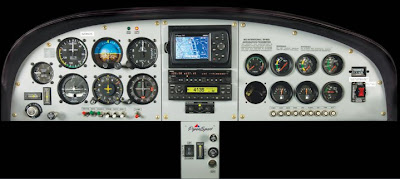
Original trim levels were pitot/static, six-pack, and Dynon glass cockpit. It comes with leather seats colored to match the paint (Seats are fixed, the rudder pedals are adjustable and can apparently accommodate anyone between 5 and 6 feet tall), dual center sticks with center throttle, rudder pedals with differential toe brakes (brake steering, castering nosewheel), two-place intercom, electric Fowler flaps, electric elevator and aileron trim (given the wing lockers, aileron trim on such a small plane makes sense), and so forth.
Check out the panel:
The problem with the plane is that it had distribution and support problems. Like most start-ups into the LSA market, "Dealership" or "Importer" was singular in this case.
Then the tenth rolled around and Piper announced they decided to import, distribute and support the airplane under the Piper badge. They called it: The PiperSport.
So now, when someone asks you the make and model, you have to tell them it's a Piper PiperSport. They didn't think the name through very well.
Piper repainted the bird, scrapped the kit version for the USA, scrapped the pitot/static only version, added a Dynon EFIS-only panel in it's place, and gave it a silly name. It will still be made in the same factory in the Czech Republic, have the word "Piper" painted on it in about 20 places, and shipped across the Atlantic.
Now, my opinions:
As stated earlier, it's a work of art. And I know that I compared it to four of the most attractive certified airplanes available new today. Now stand it next to the Evektor SportStar, the Flight Design CT, and the Cessna CessnaSport (er, Skycatcher). Even the Allegro's lines aren't as attractive. the PiperSport doesn't look like an LSA. The interior is finished as good or better than a Cessna Skyhawk (It isn't as car-like and posh as a Cirrus interior, but I actively don't like Cirrus). If an LSA school happened to have all the sport planes I just listed, I bet most people will point at the PiperSport and ask to fly that one.
Which means it's got built-in marketing. If there are three schools in the area, one with CTs, one with Skycatchers, and one with PiperSports, people will want to fly the sexy little Piper.
I also love how typical it is. The Allegro makes a good trainer in that it has all the right bad habits. Allegro has textbook adverse yaw, left turning tendencies, and so forth. But there's one control stick and two throttles, and there's one brake, and it's got a silly fuel system and the switches are labelled with the wrong words (reflector=landing light apparently).
Not the PiperSport. Take another look at that panel up there. Toggle switches, real circuit breakers, and that key switch says OFF, L, R, BOTH, START just like it should. It's got toe brakes, a normal airplane fuel system and so forth. That's gonna make it brilliant for training; it's such a typical airplane. A pilot brought up on Cessnas and Pipers will be right at home.
Also, you can now actually get one. Well, not yet, they'll start deliveries in April. But It's been picked up by Piper, so you can figure out where to get one, and no worries about whether you can get parts for it next year.
What a stroke of genius on Piper's part. Look at Cessna. When they announced the LSA feasibility project, the entire GA world chanted in unison "Oh Father, who art in Wichita, Textron be thy name. Thy airplane come..." Then they got egg in their face when they announced it was going to be built by communists. Then they got egg in their face when the first prototype crashed. Then they got egg in their face when they delayed the launch. Then they got a robin egg in their face when they announced that it would be Continental powered. Then they got an emu egg in their face when they cancelled the Citation Columbus. Then they got egg on their face when the other 162 prototype crashed. Now they've managed to get one delivered--To the wife of Cessna's CEO. Ya get that? They sold one to themselves.
They've dumped hundreds of thousands--maybe millions--of dollars into the 162 for research and development, and gotten tons of bad press about it. Then, a few years later, Piper finds a great airplane that's already built, proven and flying, slaps their badge on it, and turns GA on it's ear.
Something I'm hoping that both Piper and Cessna do is write useful POH's. I've read stories about pilots operating LSA's getting killed because the aircraft's handbook was unclear. Poor translations, missing or incomplete performance charts or straight up wrongness (I've read one that declared VFE to be 65 and 70 MPH on the same page!) lead to a pilot operating the bird incorrectly. That's one thing about Cessna building theirs from the ground up; they'll write a Cessna POH.
Now before Piper ever touched the SportCruiser, the SC's POH was pretty good for an LSA, including comprehensible weight and balance info, climb performance charts, cruise performance charts for several altitudes, and even an airspeed calibration chart! Here's hoping Piper will make it even better.
On a related note, Piper is the only company that currently manufactures a complete training fleet. With the PiperSport, Warrior, Arrow, and Seminole, you can now go from sport pilot through private, instrument, commercial and multi-engine, all under the Piper badge.
I have four complaints about the PiperSport. First is the poorly thought out name. Piper SportCruiser--while even lazier--would have been a better name than Piper PiperSport. It's still got a capital letter in the middle of two words jammed together. Second is the electric trim. It's not like there's a trim wheel and the buttons on the stick turn it for you; there is no wheel. you trim with the buttons, so if you lose the electronics you lose trim. Third, the choke lever is right next to the throttle, almost to the point of being underneath it. I would have used a plunger-type thing and put it on the instrument panel near the ignition key the way older airplane primers were. I haven't taken a very good look at the current setup, but I can see scraping a knuckle on the existing choke lever. Or I may just be an idiot. And fourth is the parachute. Yes it comes with a ballistic parachute. Hopefully it can be ordered without. If it can, this complaint goes away.
So, I'm not fond of the name, it's like a supermodel named Gladys Gladysson. Please to give manual trim. Please to move choke, and please to keep parachute. And then I'll start lobbying for the State of North Carolina to make it legal to marry an airplane.
A few words about the SportCruiser as it was on 1/1/10:
The airplane was available as S-LSA or an E-LSA kit, and in either case the plane had a pretty awesome feature list. Like, this airplane can hold it's own against comparable certified airplanes.
Where to begin? Oh I know, to begin, it looks like this:
 It's drop dead gorgeous. It looks like a Liberty XL2 and a Diamond DA-20 had a really hot daughter.
It's all aluminum construction, wings and fuselage. It hit the market in 2006, and I think it's age and construction come together to give it it's classic yet contemporary lines. It looks right at home standing on the ramp in between a Cessna 350 and a Cirrus SR-20, even if it is made of metal.
Yes, that is a Rotax 912ULS under that cowling, churning out 100 brake horsepower. Yes, those grey spots on the wings are gas caps. Each wing tank holds 15 gallons for a total of 30. It has normal fuel tanks. Something else that you can't see in that photograph are the wing lockers.
WING. LOCKERS. I first came across that term while reading a multi-engine textbook and here a light sport airplane's got 'em. Each wing locker holds 44 pounds of things IN ADDITION to the 40 pounds that can fit on the shelf in the cabin behind the seat. That's 128 pounds of baggage. That's 8 pounds more than a C172 holds between it's two baggage compartments.
Original trim levels were pitot/static, six-pack, and Dynon glass cockpit. It comes with leather seats colored to match the paint (Seats are fixed, the rudder pedals are adjustable and can apparently accommodate anyone between 5 and 6 feet tall), dual center sticks with center throttle, rudder pedals with differential toe brakes (brake steering, castering nosewheel), two-place intercom, electric Fowler flaps, electric elevator and aileron trim (given the wing lockers, aileron trim on such a small plane makes sense), and so forth.
Check out the panel:

The problem with the plane is that it had distribution and support problems. Like most start-ups into the LSA market, "Dealership" or "Importer" was singular in this case.
Then the tenth rolled around and Piper announced they decided to import, distribute and support the airplane under the Piper badge. They called it: The PiperSport.
So now, when someone asks you the make and model, you have to tell them it's a Piper PiperSport. They didn't think the name through very well.
Piper repainted the bird, scrapped the kit version for the USA, scrapped the pitot/static only version, added a Dynon EFIS-only panel in it's place, and gave it a silly name. It will still be made in the same factory in the Czech Republic, have the word "Piper" painted on it in about 20 places, and shipped across the Atlantic.
Now, my opinions:
As stated earlier, it's a work of art. And I know that I compared it to four of the most attractive certified airplanes available new today. Now stand it next to the Evektor SportStar, the Flight Design CT, and the Cessna CessnaSport (er, Skycatcher). Even the Allegro's lines aren't as attractive. the PiperSport doesn't look like an LSA. The interior is finished as good or better than a Cessna Skyhawk (It isn't as car-like and posh as a Cirrus interior, but I actively don't like Cirrus). If an LSA school happened to have all the sport planes I just listed, I bet most people will point at the PiperSport and ask to fly that one.
Which means it's got built-in marketing. If there are three schools in the area, one with CTs, one with Skycatchers, and one with PiperSports, people will want to fly the sexy little Piper.
I also love how typical it is. The Allegro makes a good trainer in that it has all the right bad habits. Allegro has textbook adverse yaw, left turning tendencies, and so forth. But there's one control stick and two throttles, and there's one brake, and it's got a silly fuel system and the switches are labelled with the wrong words (reflector=landing light apparently).
Not the PiperSport. Take another look at that panel up there. Toggle switches, real circuit breakers, and that key switch says OFF, L, R, BOTH, START just like it should. It's got toe brakes, a normal airplane fuel system and so forth. That's gonna make it brilliant for training; it's such a typical airplane. A pilot brought up on Cessnas and Pipers will be right at home.
Also, you can now actually get one. Well, not yet, they'll start deliveries in April. But It's been picked up by Piper, so you can figure out where to get one, and no worries about whether you can get parts for it next year.
What a stroke of genius on Piper's part. Look at Cessna. When they announced the LSA feasibility project, the entire GA world chanted in unison "Oh Father, who art in Wichita, Textron be thy name. Thy airplane come..." Then they got egg in their face when they announced it was going to be built by communists. Then they got egg in their face when the first prototype crashed. Then they got egg in their face when they delayed the launch. Then they got a robin egg in their face when they announced that it would be Continental powered. Then they got an emu egg in their face when they cancelled the Citation Columbus. Then they got egg on their face when the other 162 prototype crashed. Now they've managed to get one delivered--To the wife of Cessna's CEO. Ya get that? They sold one to themselves.
They've dumped hundreds of thousands--maybe millions--of dollars into the 162 for research and development, and gotten tons of bad press about it. Then, a few years later, Piper finds a great airplane that's already built, proven and flying, slaps their badge on it, and turns GA on it's ear.
Something I'm hoping that both Piper and Cessna do is write useful POH's. I've read stories about pilots operating LSA's getting killed because the aircraft's handbook was unclear. Poor translations, missing or incomplete performance charts or straight up wrongness (I've read one that declared VFE to be 65 and 70 MPH on the same page!) lead to a pilot operating the bird incorrectly. That's one thing about Cessna building theirs from the ground up; they'll write a Cessna POH.
Now before Piper ever touched the SportCruiser, the SC's POH was pretty good for an LSA, including comprehensible weight and balance info, climb performance charts, cruise performance charts for several altitudes, and even an airspeed calibration chart! Here's hoping Piper will make it even better.
On a related note, Piper is the only company that currently manufactures a complete training fleet. With the PiperSport, Warrior, Arrow, and Seminole, you can now go from sport pilot through private, instrument, commercial and multi-engine, all under the Piper badge.
I have four complaints about the PiperSport. First is the poorly thought out name. Piper SportCruiser--while even lazier--would have been a better name than Piper PiperSport. It's still got a capital letter in the middle of two words jammed together. Second is the electric trim. It's not like there's a trim wheel and the buttons on the stick turn it for you; there is no wheel. you trim with the buttons, so if you lose the electronics you lose trim. Third, the choke lever is right next to the throttle, almost to the point of being underneath it. I would have used a plunger-type thing and put it on the instrument panel near the ignition key the way older airplane primers were. I haven't taken a very good look at the current setup, but I can see scraping a knuckle on the existing choke lever. Or I may just be an idiot. And fourth is the parachute. Yes it comes with a ballistic parachute. Hopefully it can be ordered without. If it can, this complaint goes away.
So, I'm not fond of the name, it's like a supermodel named Gladys Gladysson. Please to give manual trim. Please to move choke, and please to keep parachute. And then I'll start lobbying for the State of North Carolina to make it legal to marry an airplane.
Friday, December 25, 2009
Collections
I would like to step out of the aviation topic for awhile, given nobody reads this anyway, and talk about collecting.
There are people in this world that have extensive collections of virtually everything. There's a guy somewhere that has a very very large collection of GI Joe action figures and vehicles and things, all unopened and in their original packaging.
I find that very sad.
I have a few collections, but of a different sort. I have a large rack of video cassettes and DVDs, and every single one of them is unwrapped and has been watched at least once. Our collection isn't a load of useless junk that we have for the sake of having it; we use and love our entire video library. It's a considerable collection; all told we have over a thousand movies and episodes of TV shows, not counting the huge box of VHS tapes we recorded off of HBO for more than half of my life.
Another example is my collection of Clive Cussler novels. I have an extensive collection of Dirk Pitt adventures; I'm only missing four. I've re-read several of them, particularly Inca Gold and my very favorite, Sahara. I collect them because I enjoy reading them. I have a desire to never own an autographed first edition of any of the books, and I'll willingly trade any of my three hardcovers (Valhalla Rising, Trojan Odyssey and Arctic Drift) for their paperback equivilants.
A signed hardcover is wasted on me. I would wear it out reading the book and ignore the autograph. There's only so many books Mr. Cussler is going to autograph, so those should go to the people that really want them. Just give me the $6 paperback found in any random Walden's and I will enjoy it. In fact, I would like to take this opportunity to thank Mr. Cussler for the many many hours of enjoyment I have gotten from his cheap paperbacks.
That's why I find it sad that there are people that never unwrap some of their collections. I mean, okay I understand museums, but there are people that have personal collections, like the GI Joe guy up there. It's almost tragic that those toys aren't taken out and played with.
Another collection that I'll fight you over is my collection of aviation books. Even though it is outdated and somewhat inaccurate at this point, my copy of Jeppesen's Private Pilot Manual is among my most prized posessions. Even though it is an instructional textbook for Private Pilots, and I've been one for four years now, I still refer to it all the time. I would like to have shelves and shelves of aviation books, and a coffee table full of things like "Fighters of WWII" and such, in a dedicated room built into my hangar/flight school I'll eventually own, so that all of my students and customers can just come and hang out. That's a big problem with aviation, you feel like you need a reason to go to the airport. Well, I want one of those reasons to be "to read about flying."
That collection--my current and modest library of aviation references--is much loved. You can tell by the four pages that are falling out of my 1977 model Cessna 172N POH, and the worn-out binding of the aforementioned Private Pilot Manual. I bought my Flight Instructor manual used and it shows--it's bent. The book doesn't lay flat.
Big shelves of fun movies, fun novels and great reference books filled with wonderful knowledge...does a more wonderful thing exist? Throw in a nice DVD/VHS deck, a great TV with sound system and a big, comfy leather chair/sofa and you've got yourself a deal. Hmm, maybe I should spend more time up at the public library.
Friday, September 25, 2009
Cheers!
The entire staff at Allstar Aviation is pleased to congratulate Mister Perry Reed, the first man to complete the Bronze level of Operation: Fly NC! Captain Reed flew his Cessna 172 to at least 30 airports, attending at least one safety seminar and visiting at least one museum. Enjoy your nifty backpack, Captain!
I have made progress on that front as well: So far I have the stamp from KHRJ, KHKY, KOAJ, KDPL, KSOP, KJNX, and my home base at KTTA, plus the Airborne/Special Ops museum in Fayetteville.
I have made progress on that front as well: So far I have the stamp from KHRJ, KHKY, KOAJ, KDPL, KSOP, KJNX, and my home base at KTTA, plus the Airborne/Special Ops museum in Fayetteville.
Monday, June 1, 2009
Operation: Fly NC
For years I've been playing a little game, just for my own amusement. Every time I go on a cross country, I intend to land somewhere different each time. Eventually, I'd like to visit every public-access airfield in North Carolina by air.
Well, now there's prizes with it. Someone, somewhere decided to encourage tourism, education and flying. They've scattered rubber stamps to FBO's and aviation museums across the state, along with stacks of booklets. The booklet contains a grid, each square labelled for one of the 81 participating airports or museums. To prove you've visited each site, you carry your book along and have the appropriate square stamped.
Each site has a stamp with the same basic North Carolina motif, each containing the call letters of the airport (to prevent getting multiple stamps in the same location). Collecting a certain number of stamps from airports and museums earns a prize, the grand prize being a really nice aviator watch.
The only problem is that I've visited a dozen fields before the contest started, so I don't have their stamps and I have to return. The official rules of the game are that you must visit each site in person to get the stamp, and they'll even card you to make sure that you own the book. It expressly states that you don't have to fly into each airport, thus if you feel uncomfortable flying into an airport, you are allowed to drive or otherwise arrive. (One of the stamps is located at Charlotte Douglass, for crying out loud)
Because I set out once to land at each public-access airport, I intend to visit each field by air. I will only drive to airports I've already landed at, like Moore County airport or Albert Ellis. Granted, I was given my booklet at Hickory and I had driven there, but I did drive there so that I could fly an airplane based there, so I have technically landed at Hickory Regional. I currently only have three airport stamps; Hickory, Sanford and SOP. others to follow.
Check out their website, operationflync.com, and have some fun.
Saturday, April 25, 2009
...Until you get it right
There are some secrets to the Allegro 2000 that I had to figure out on my own.
Until flying the Allegro, I flew the Piper PA-28/140 Cherokee, the PA-28/180 Warrior, and the Cessna C-172N Skyhawk, Mostly the Skyhawk. Because the Allegro is high wing, we'll compare it to the Skyhawk.
I'm 5'7" tall, and on a level ramp I can walk clean under a skyhawk's wing upright. Attempting to jog under the Allegro's wing without ducking buys a trip to the dentist. Where the Skyhawk has hand holds and foot grips so you can climb up to see the tops of the wings, a moderately tall pilot can do so with soles on terra firma.
Climbing into a skyhawk's captain's seat means standing under the wing behind the wing strut, opening the (forward swinging) door, placing your left foot on the gear strut, and swinging up into the plane. The Skyhawk is very much like a Toyota Camry in seating posture; upright and neutral. Your spine is vertical.
Climbing into the Allegro means ducking under the wing ahead of the strut, opening the (upward swinging) door, sticking your butt into the cabin, and falling over backwards; butt, head, feet. The Allegro has a laid-back chair; much more like a Mazda Miata. Your spine is about 15-25 degrees aft of vertical.
The result of chair height and rake has one major result: The Allegro pilot's head is about 2 feet lower than the head of the Skyhawk pilot. The first 30 times I flared the Allegro, I put it in a perfect Cessna sight picture and fell the remaining foot and a half out of the sky, into a nose-high 3 point landing.
The third point is the tail-skid. Let's review: "The first 30 times I flared the Allegro..." You don't want to flare the Allegro because of it's lowered tail fin. Instead, the pilot should glide into ground effect, level out, bring the nose up so that the mains will light before the nose wheel, and allow the ship to settle to the runway.
But that's landing. Let's talk about the pattern in order. I love blasting off of the pavement and climbing to 50' AGL before the 500' marks, but it causes problems later. I fly from KTTA, A 6,000' X 100' slab of asphalt. The above "50' AGL before the big marks" bit is the normal takeoff procedure. Short-field takeoffs can have you at pattern altitude before reaching the far end of the runway. The normal takeoff is done with one notch of flaps, retracted basically as soon as you're off the ground and climbing. The flaps help the ship climb away from the surface without an excessively nose-high attitude, which would again bang the tail on the ground.
The landing phase of touch-and-goes eats up about 400 feet worth of runway, bringing the geometry of the pattern closer to comfortable, and so will carrying a passenger.
I don't like staying on upwind any longer than I have to, and the AIM suggests turning no sooner than crossing the departure threshold. So that's what I do, usually at about 700' AGL. The turn is sharp, so I'm usually inside the fence while starting crosswind. Crosswind lasts long enough to get the plane up to pattern altitude, and power/trim set for level flight at about 100 mph. That takes about 8 seconds. Then I turn downwind. I shoot large patterns compared to my instructor, and I'm still FAR inside of most other traffic.
In fact, let's talk about that. The traffic pattern exists so that, in the event of an engine failure, you can glide to the runway. The flying club at the field operates 3 Cessna 152s, with a glide ratio of 8:1. The Allegro 2000 glides at 12:1. I have seen the flying club's cessnas fly a downwind leg one or two miles beyond the approach end threshold of the runway before turning base, out to where I couldn't glide the Allegro to a safe landing should the engine fail, let alone a C-152. Also, you eat up time flying downwind instead of landing. Fewer landings per hour of practice.
Anyway. Abeam the approach end numbers, I bring the power to idle and leave it there, trim almost all the way aft, and let the ship fly. The airspeed will fall to around 70 (top of the white arc), one notch of flaps. She'll descend at a pretty 65 mph. Once you've gotten all that done, it's just about time to turn base. Let the ship come down. If you're low, power. If you're just right, forget it, land the plane. If you're high, wait a minute.
Wait until you're almost to the runway edge line before turning, cause she turns sharp when going this slow. Unless you're high, forget the second notch of flaps. It's a BIG configuration change, one that's basically superfluous. If you are too high, go ahead and lower those big plain flaps to 48 degrees, and trim neutral. If you leave it back there where you set it up on downwind, you're going to fight the ship all the way to the ground.
Once over the asphalt, you have to fight the habits learned in the skyhawk. Skate along in ground effect for a second, enjoying it because it's really fun, and let it settle. No Flaring. And at some stage you'll hear the wheels start to roll.
Flying out of the pattern is different too. Stalls break kind of abruptly. It's almost like a pair of giant hands twist the plane from the wing tips. You could steep turn the ship in a basketball gym. The windows extend down below your lap, so you can see beyond the vertical while turning. Keep your eyes on the horizon if you are afraid of heights. The low panel and big windows are great for ground reference maneuvers.
The cessna pilot will swallow his Adam's Apple on his first cross country in the Allegro. No VOR, no ADF, no heading indicator. You've got one COM radio, one magnetic compass, and maybe a handheld GPS, either stuck in one of those 3rd party panel mounts or on a ball joint on the console ahead of the stick.
The single-stick-between-the-seats arrangement gives the plane some unique challenges when navigating. For example, most people are right handed, so writing on the kneeboard while steering the plane can be a problem. I'm a lefty, so this plane actually makes things easier.
On the plus side, I can actually wear my orgaKNEEzer because there's no yoke to mess with it, and you've got plenty of lap space to spread out a chart. Your knees are higher than your butt, so you have a nice little chart table to work from.
Working the radios with your left hand is a pain in the ass. They're usually centered in the panel or offset slightly to the right, and the knobs on a COM radio are ALWAYS on the right side of the unit. So you have to reach most of the way across the ship to turn the dials. This usually means throwing off the 4-point shoulder harnesses. Inertia reels would be really nice.
I usually find myself spreading my chart in the right seat, and taking up my lap with navlogs. I end up cruising with at least one of the shoulder harnesses tucked behind my shoulder so I can get at the panel if need be.
I have not yet flown the Allegro at night, so I can't speak to any cabin lighting or whatnot. I've never noticed any interior lighting.
What an airplane. It'll suprise you.
Thursday, April 9, 2009
The Difference...
Greetings and salutations and all that.
Normally, a pilot begins his career as a private pilot, and progress through the instrument rating and commercial certificate, often earning a Flight Instructor certificate soon after. Thus a CFI progresses steadily and easily to professional pilot.
CFI-SP requires a sport pilot certificate and 150 hours of flight time, with the usual stipulations of pilot-in-command time, cross country time, etc. along with the practical, FOI and the flight instructor-sport airplane written. So, the transition from amateur to professional is rather abrupt. I am in the midst of that transition, and I'm going to chronicle that transition (as well as whatever else I feel like) here.
The Backstory: My intro flight was my 14th birthday gift. I spent most of high school studying the books, and began flying late in my junior year. I started flying PA-28 Cherokees at Albert J. Ellis (KOAJ) in Richlands, NC. Between weather, travel and aircraft availability, I spent about 3 months gathering 10 flight hours. I moved my training to a little closer to home, to Moore County (KSOP). No Pipers there; I completed my training in N500TC, a 30 year old Cessna Skyhawk. Great aircraft; the trim wheel isn't a damned window crank on the ceiling.
Shortly after I completed training, I rented the aircraft for about an hour. I came back, shot a lousy approach and decided to go around. On climbing out, the flaps wouldn't retract. I was blamed for the failure, charged for the repair and asked not to fly with them again.
I moved my operation to Sanford Lee Co. Regional (KTTA). Here I flew a newer but more run-down Skyhawk. And I mean that ship was tore up. It flew just fine, but it was less than glamorous.
At the other end of that same airfield are two other businesses that provide aircraft. One is a flying club that operates a fleet of about ten ships, from Cessna 152's to a pair of Mooney Bravos. The other one is B-Bar-D Aviation. I've spent about 23 hours in their aircraft, various examples of the Fantasy Air Allegro 2000.
So there I am. I'm a 110 hour pilot or so, needing another 40. Just fourty hours. I have fourty hours to become a professional pilot.
And so my blog post has come full circle; back to becoming a professional pilot. I once heard someone in the airline industry describe that transition thusly: The difference between an amateur and a professional is that an amateur practices until he gets it right. A professional practices until he does not get it wrong. I've got a lot of work to do
Subscribe to:
Posts (Atom)